Landscape time-lapse video requires movement to be interesting. That’s usually accomplished by motion control and (more importantly) dramatic moving light in the form of clouds and shadows. In the Bay Area that means winter is our window to shoot time-lapse of any weather besides fog. (As I demonstrated in my Day in the Life of a Fire Lookout video<, fog can be a great subject but when you’re on top of a mountain and pointing the camera upwards it doesn’t help much.)
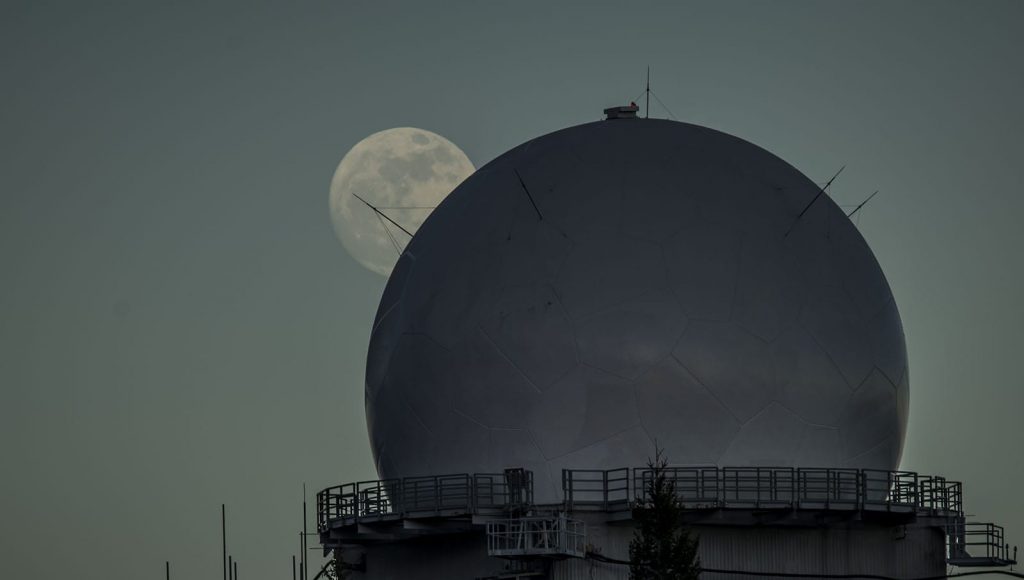
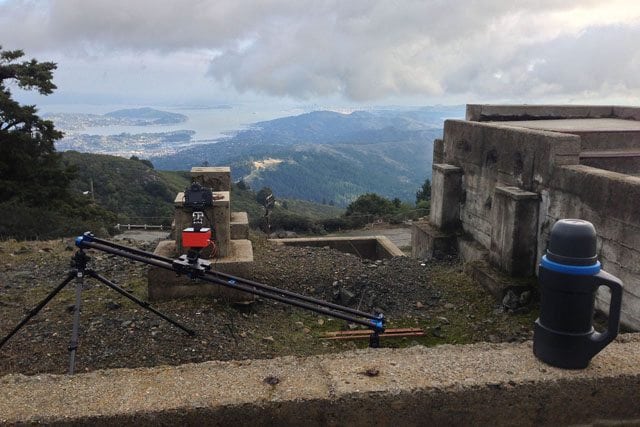
I began shooting for the West Peak project in late December and by early January I had learned a lot about what I need to do to get the shots I want. The West Peak area I’m working in is between 2450 and 2530 feet in elevation and when the cloud ceiling is just around that height the scene becomes very dramatic. The sight of the clouds rolling across the landscape and breaking to reveal the Marin headlands provides strong visual cues that we are on the top of a mountain.
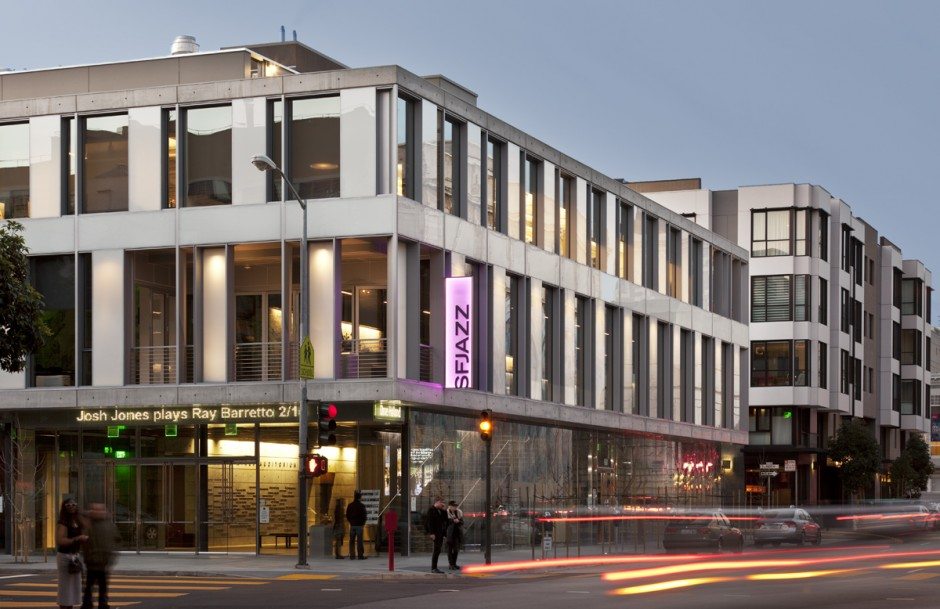
Henrik Kam has been documenting the creation of the stunning new SF landmark, the SF Jazz Center!
SF Jazz hired him to document the construction and progress of the SF Jazz Center over a period of 18 months. Among other things, Henrik mounted a web-cam to create time lapse sequences. Currently, he is in the process of making the final photos of the project. You can see his work HERE.
Henrik will be working with another impressive SF landmark, the new SFMOMA addition, later this year.
We are happy to have Henrik teaching The Flow’s Architectural Photography and Urban Landscape class again this year. His knowledge of the San Francisco landscape, on the ground technical and artistic experience and thorough understanding of architectural photography will make for an amazing class!
Photographer and filmmaker Gary Yost writes about his project to document the history of the lost West Peak of Mt. Tamalpais.
Over the past two months I’ve been busy conducting initial tests of new motion-control equipment I’ve acquired for creating the time-lapse portion of the project. One of my frustrations with the two-foot slider I used in the Fire Lookout piece is that it wasn’t long enough to provide enough visual parallax cues to make larger scenes look three-dimensional. These parallax cues are essential to providing an immersive sense of the scene because when the camera is moving, closer objects will move across your visual field much more quickly than objects farther away. When shooting basic time-lapse sequences you can easily lock the camera down on a tripod and shoot a frame every few seconds. That’s easy to do, but to get parallax effects you need to mount the camera on a motorized slider that will move it a fraction of an inch after every shot. This technique was invented by Ron Fricke in the late 1970s for the groundbreaking film Koyannisqatsi, and then refined for his later masterpieces, Chronos, Baraka, and 2012’s Samsara.
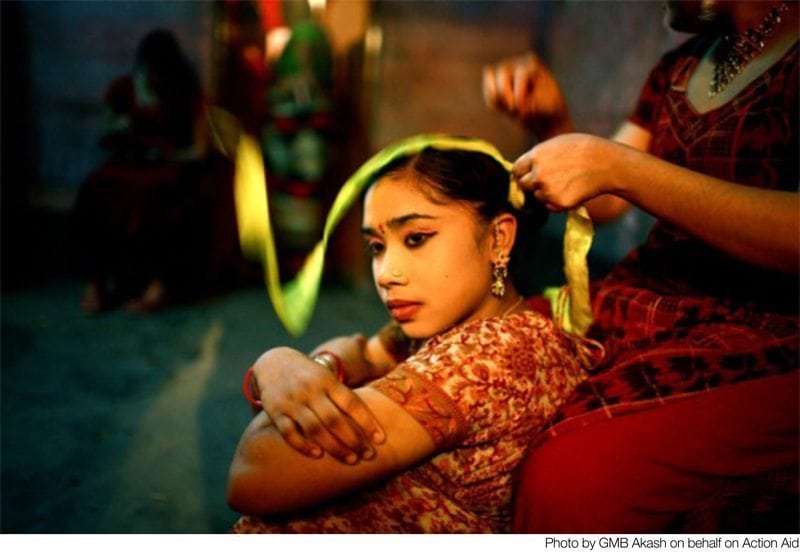
Alexa Dilworth, Publishing Director and Senior Editor at the Center for Documentary Studies at Duke University (CDS), was one of the judges at PhotoPhilanthrophy’s Activist’s Awards live judging here at The Image Flow in January.
She has written an honest and thought provoking blog for PhotoPhilanthropy about her experience as a judge and some of the challenges she encountered.
How does a photographer create a body of work that viewers can really see, take in with an awakened sensibility, and be engaged enough with to act, to answer a call to action?
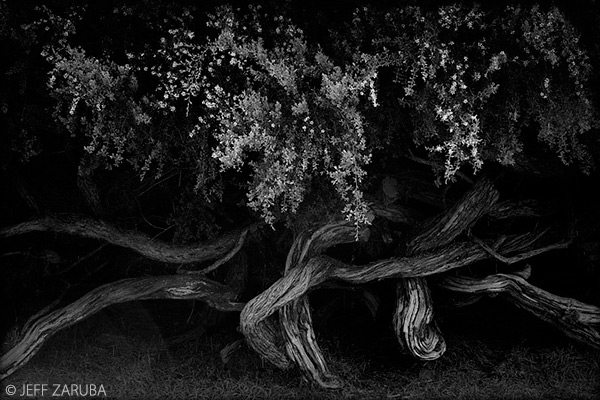
This will be Jeff Zaruba’s second year teaching a class at The Flow. He likes to get into the “why” behind his students interest in photography, and help them understand their vision and curiosity. He finds working with the students incredibly rewarding as he helps them gain confidence and reach the next level of their artistic potential.
Photographer and filmmaker Gary Yost writes about his project to document the history of the lost West Peak of Mt. Tamalpais.
I am a Mill Valley-based photographer and filmmaker who likes to tell stories, big and small. Over the years I’ve been fortunate to be a part of some very interesting local community activities.
One of my 2012 projects was to document what a day in the life of a fire lookout on the East Peak of Mt. Tamalpais is like. I created it primarily as a recruitment piece for the Marin County Fire Department, but it saw much wider distribution as a testimony to the beauty of our mountain. There are a number of reasons for its popularity but I think the two biggest are that it shows an aspect of the mountain that nobody has seen before and it uses time-lapse techniques to illustrate how time passes in a way that we can’t see with our naked eyes.
The live judging of PhotoPhilanthopy’s Activists Awards (at The Image Flow January 26) has turned our attention to the history of photojournalism. PhotoPhilanthropy’s Activists Awards PhotoPhilanthropy, now CatchLight, is a Private Family Foundation whose mission is to “…address critical social and environmental issues by providing nonprofits and photographers with the resources to work together to […]
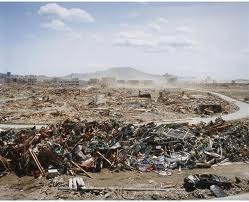
Japanese photographer Naoya Hatakeyama’s hometown of Rikuzentakata, Japan, was destroyed by the March 11, 2011 Tohoku earthquake and tsunami. A few days later, he returned to what was left of his town to document the aftermath.
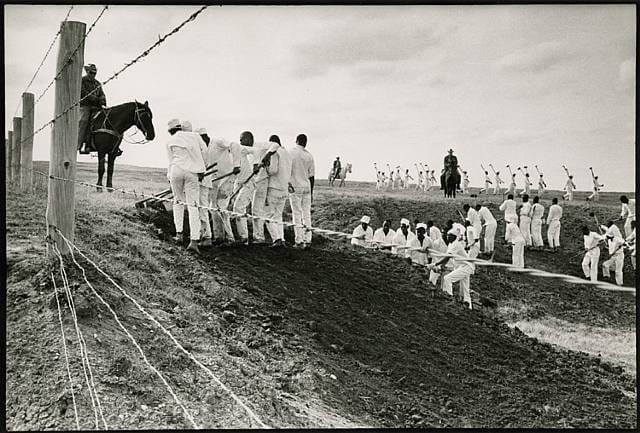
The World Is Not My Home: Photographs by Danny Lyon is at the de Young though January 27. This exhibit sparingly covers his work from the early ’60 civil rights movement with the SNCC (Students Nonviolent Coordinating Committee) the Occupy Movement protests of 2011.
The Image Flow sat down with Gary Yost to discuss his experience trekking up to Pt. Arena in Mendocino County to photograph the unusual shaped rocks that reveal themselves only at certain tides. What inspired you to photograph Bowling Ball Beach in Mendocino’s Pt. Arena? I was at the Mill Valley Fall Arts Festival in […]
Stay in touch with The Flow!
Discover new workshops, get invited to events, and receive special promotions only for our followers!
Your information will *never* be shared or sold to a 3rd party.